

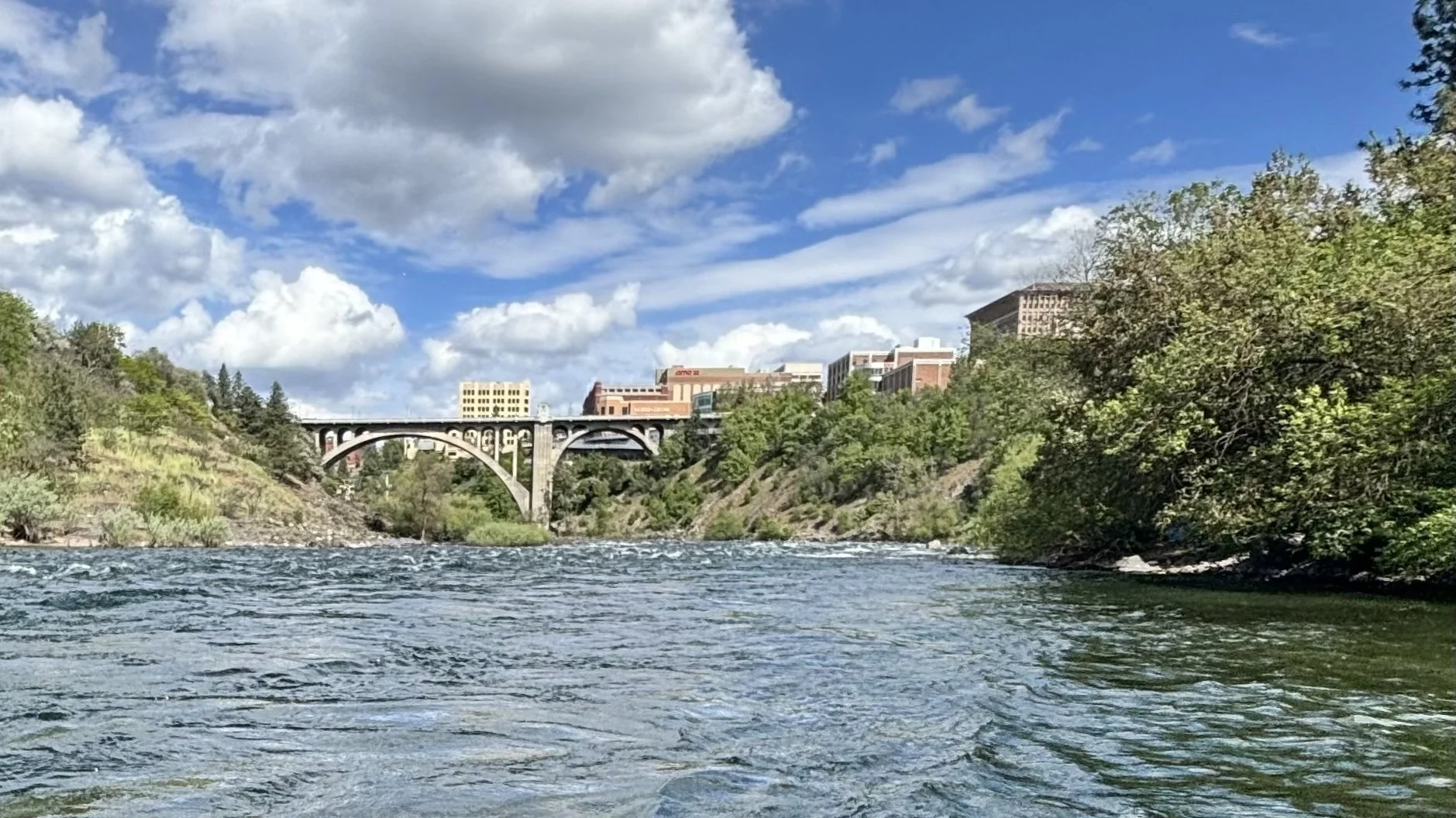
Spokane River
A River With Deep History
A clear freestone river close to home—technical water and resilient native redband trout.
The Spokane River flows quietly from Lake Coeur d’Alene toward the Columbia River, passing through the heart of the Inland Northwest.
Despite its proximity to urban life, much of the Spokane retains a surprisingly wild character. Clear water, basalt structure, and shifting current seams create a technical trout fishery that rewards careful presentation.
Long before modern anglers cast flies along its banks, the Spokane River sustained the Spokane Tribe, whose name itself is often translated as “Children of the Sun.” For generations, the river shaped daily life in the region, providing food, travel, and gathering places for communities throughout the watershed.
The Spokane Falls, located near the center of today’s city, were once one of the most important fishing sites in the Inland Northwest. Each year, salmon returning from the Pacific moved up the Columbia and into the Spokane River, drawing people together along the falls to fish, trade, and share in seasonal gatherings that had taken place for centuries.
Those salmon runs disappeared in the early twentieth century with the construction of downstream dams, fundamentally changing the river’s ecology. Yet the Spokane remains an important part of the region’s landscape and culture, flowing through the same valley that supported life here long before the modern city emerged.
Today the river continues to support native redband trout and a growing appreciation for the natural character that still exists within this urban watershed. Spending time on the Spokane offers a quiet reminder that even rivers running through cities carry long histories within their current.
What Makes the Spokane Unique
Native redband trout
These wild trout are uniquely adapted to the river’s changing flows and temperatures.
Technical clear water
Subtle presentations and careful approach matter here.
Dynamic pocket water
Basalt formations create varied current seams and structure.
Urban river, wild character
Few trout rivers run this close to a city while retaining such natural qualities.
When to Fish the Spokane
Spring: Rising flows move through the system as snowmelt begins. Trout often hold tight to structure and slower seams while adjusting to changing water levels. Closed March 15th - Memorial Day for redband spawning.
Early Summer: Warmer water and increased insect activity bring more consistent feeding windows. Nymphing remains productive, with occasional dry fly opportunities.
Late Summer: Lower flows make trout more selective. Early mornings and evenings often provide the best fishing conditions.
Fall: Cooling water temperatures increase trout activity and create some of the most comfortable fishing conditions of the year.
How We Fish the Spokane
Most guided days on the Spokane take place from a drift boat. Floating allows us to move quietly through long stretches of river while positioning anglers to fish the many seams, pockets, and structure created by the river’s basalt formations.
Although the Spokane flows close to the city, it fishes more like a technical freestone than a typical urban river. Clear water and complex current seams mean that trout often hold in subtle positions—along soft edges of pocket water, beneath current transitions, or just off the faster lanes where food drifts past with the current.
A typical day involves working methodically through these seams while adjusting depth and presentation as we move downstream. Small adjustments often make the biggest difference on this river.
Depending on conditions, fishing on the Spokane may include:
nymphing through pocket water and current seams
presenting dry flies when insect activity brings fish to the surface
occasional streamer fishing near deeper structure or shaded banks
Because the river is clear and trout can be wary, approach and presentation matter. Careful boat positioning, thoughtful casting angles, and attention to drift often determine success.
It’s a river that rewards anglers who pay attention.
And once you begin to see the seams where trout live, the Spokane becomes a fascinating river to explore.
Planning Your Day
Trip Style: Primarily Float Trips with Select Wade Opportunities
Skill Level: Beginner through Advanced
Season: Spring through Fall
Some anglers request the Spokane specifically. Others prefer to choose a date and allow conditions across several rivers to guide the final decision.
Either way, the goal remains the same: a thoughtful, well-prepared day on the strongest available water.